See also: 12V Portable Power Options with a Fridge
All in One
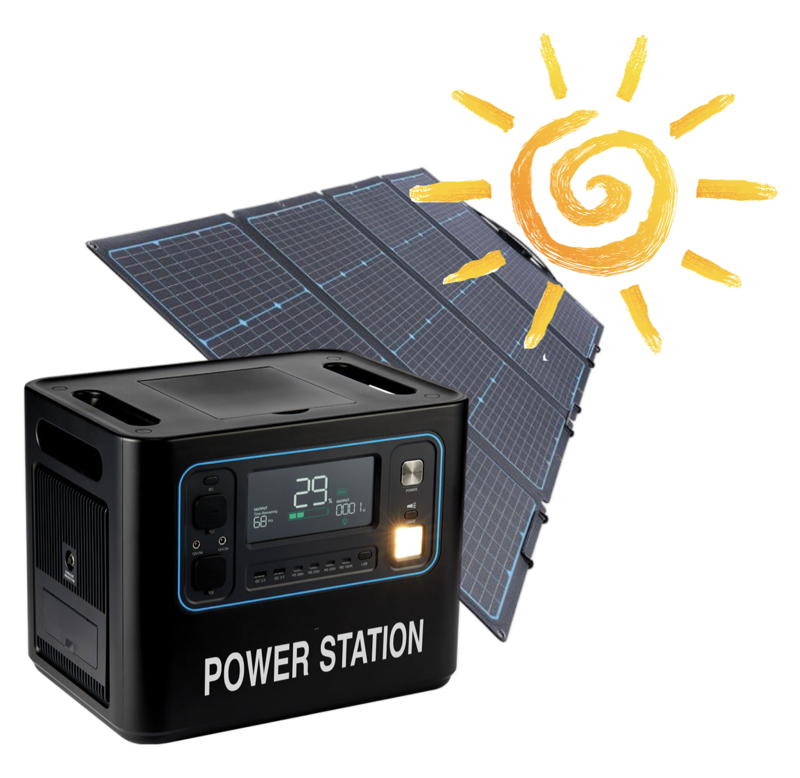 If you are travelling in a car, SUV, ute, or a multi-use van, rather than a Campervan or Motorhome with a built-in power supply, a Portable Power Station and a solar panel may be all you need for a portable (and sustainable) power supply for off-grid adventures.
Some suppliers are now putting together Power Station and Solar Panel bundles, marketed as ‘Solar Generator Kits’. These kits are an attractive all-in-one off-grid solution for powering fridges, CPAP machines, Starlink receivers and lights, while also charging mobile phones, iPads, e-bike batteries, drone batteries, and laptops. Larger models can also run domestic cooking appliances, including induction cooktops, sandwich presses, coffee machines, and microwave ovens.
These Solar Generator kits really are the easy, no fuss way to get an instant, sustainable and portable 12V (and 230V) power supply.
Going Shopping
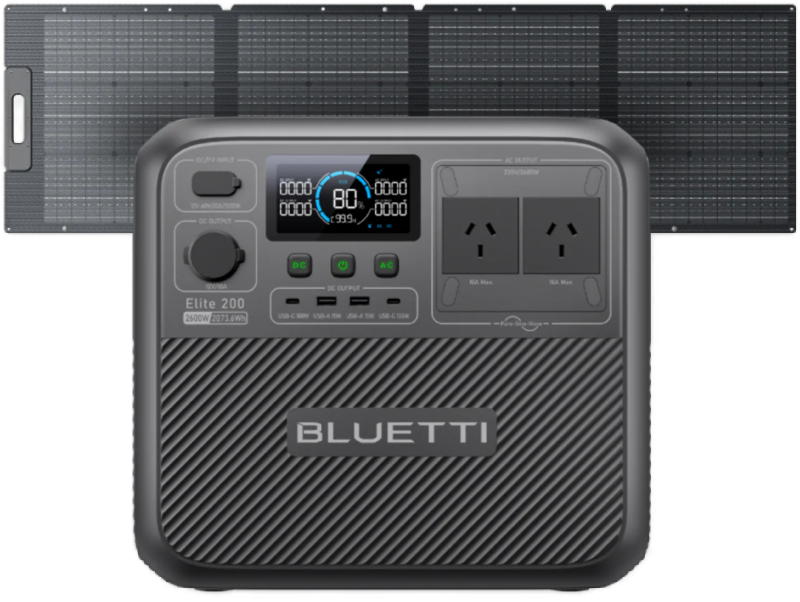
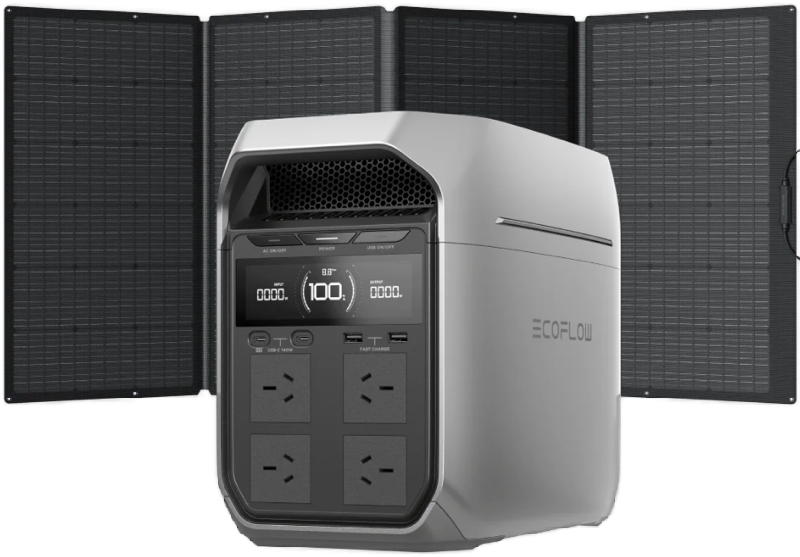
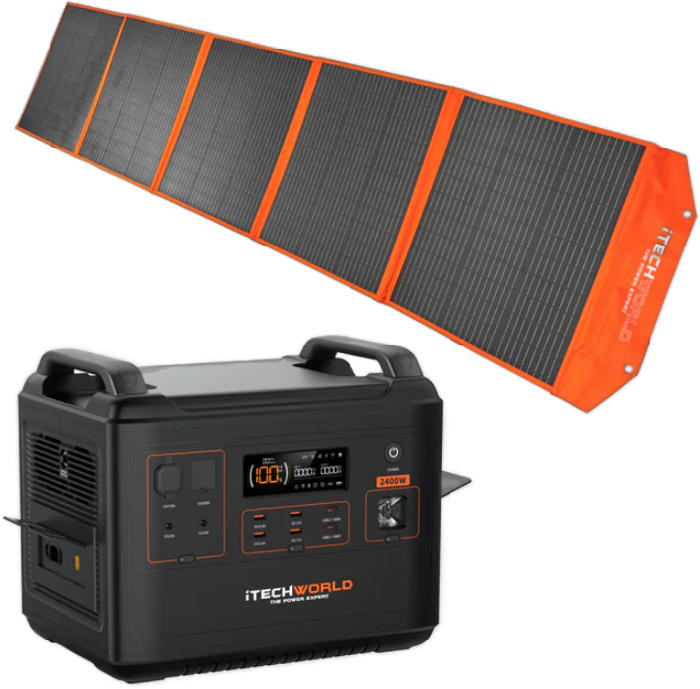
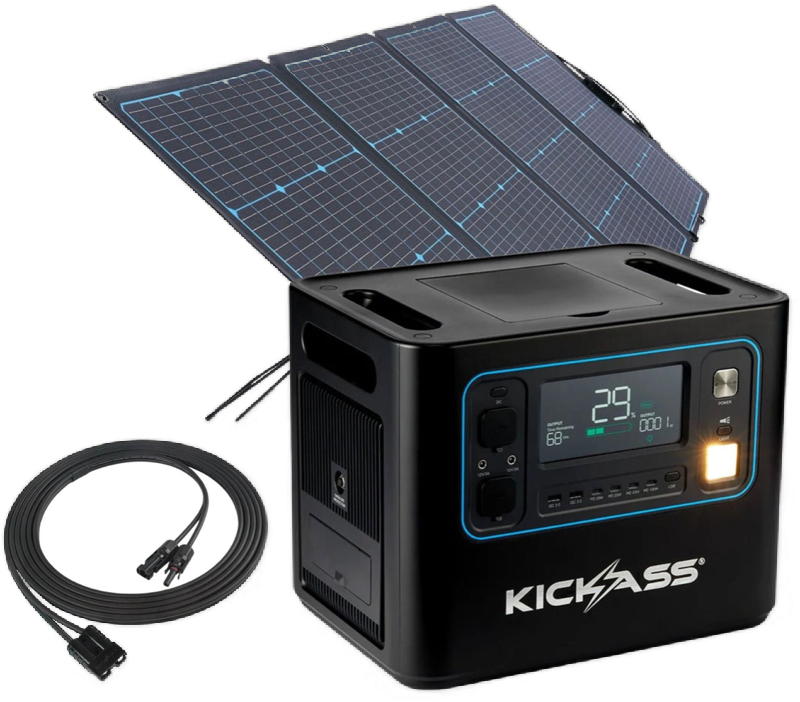
Below are some examples available from popular suppliers. Check these sites for each suppliers’ offerings of portable Solar Generator kits of various sizes.
 |
 |
 |
 |
| Bluetti | EcoFlow | iTechWorld | KickAss |
Read on for more info…
Size does matter
If you are shopping for a Solar Generator kit, the first question you will find yourself asking is….. what size? This is one of those ‘how long is a piece of string’ questions – the answer depends on many variables, relative to your particular needs and circumstances.
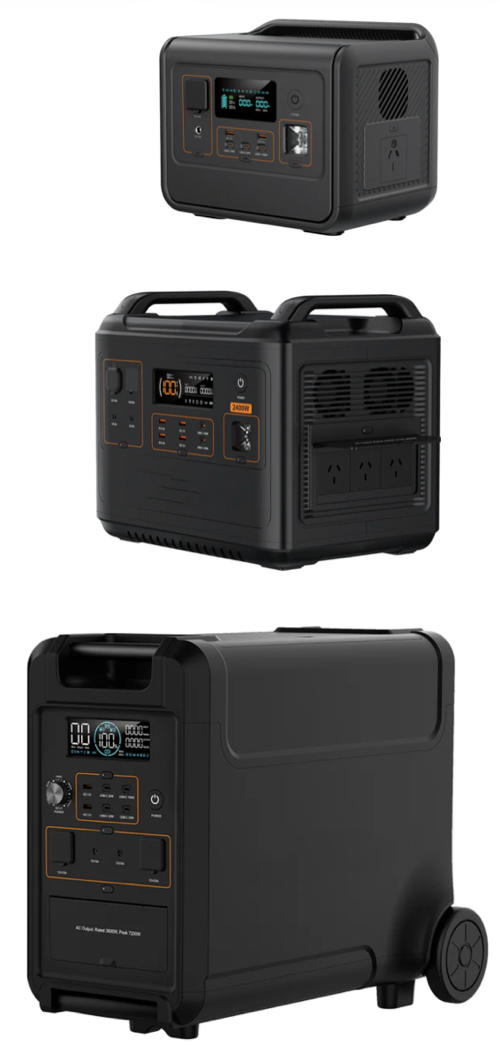 Power Station ‘size’ is based on battery capacity. Battery capacity is measured in Amp Hours (Ah) or Watt Hours (Wh). Let’s group this equipment into three categories (longevity estimates based on running only a medium-sized chest fridge)…
-
- Small: 40Ah – 80Ah (512Wh – 1024Wh) – Suitable for day trips and weekend excursions.
- Medium: 100Ah – 160Ah (1280Wh – 2048Wh) – Suitable for week-long trips.
- Large: Over 170Ah (2100Wh) – More suited to long-term off-grid living, and can be hooked up with additional battery capacity. (Very heavy.)
The estimates above include use of a solar panel to top up battery discharge. With a suitable panel and sunny skies, the batteries in these power stations can be continually recharged to power your devices for much longer than would be possible with only the stand-alone power station.
Power Station Generator kits are usually bundled with an appropriate sized folding solar panel or solar blanket, the output of which is measured in Watts. (A 200W panel is a good size for a medium size power station. See more info below)
When marketing power stations, retailers like to use the Wh (Watt hours) number, rather than the Ah (Amp hours) number when listing battery capacity, because Wh are bigger numbers and sound better in advertising, especially when your retail competitors are using those numbers. But once you get into it, Ah provides easier comparison and calculation of energy consumption of connected appliances and devices. Some model names include the W (Watts) output of the built-in 230V AC inverter – eg PS2000 – rather than a number based on the battery capacity. All of which can make it very confusing for the uninitiated purchaser.
Also keep in mind that higher capacity power stations are physically larger, and considerably heavier than lower capacity units. If you are moving the unit around from garage to car to campsite, this is important.
-
- Small: 3kg – 8kg
- Medium: 20kg – 25kg
- Large: 40+ kg (usually fitted with wheels)
Another factor to consider is that these power stations can be used as backup ‘generators’ to keep the fridge running at home when there is a grid power outage. For this reason I consider that a ‘Medium’ size model is a good all-rounder option.
Not all Lithium batteries are the same
 Portable power stations store their energy in Lithium batteries.
The Lithium batteries fitted in most power stations are Lithium Iron Phosphate batteries – also known as LiFePo4 or LFP batteries. These batteries don’t mind being charged regularly to 100% capacity, but their longevity can be maximised by not regularly discharging below 20%, and storing the battery at 60% capacity when not being used for more than a few weeks.
Some power stations use Lithium / Nickel / Manganese / Cobalt batteries, more commonly referred to as NMC, Lithium-ion or Ternary batteries. These batteries have a higher ‘energy density’, but prefer being regularly charged to only 80% and discharged to 40%, for longer lifespan. NMC batteries are widely used in laptop computers, phones and electric vehicles. Long term storage at 60% is also a good option for these batteries.
For camping applications, where regular charging to 100% is the preferred norm, LiFePo4 batteries are the way to go, and most (though not all) popular Power Stations are built around LiFePo4 batteries. Check the specs to confirm the battery chemistry before buying a Power Station.
Charge!
 Portable Power Stations are built around Lithium batteries that store electrical energy. Fridges, mobile phones, CPAP machines, kitchen appliances and other devices connected to the Power Station deplete this energy storage. Eventually the Power Station battery will need to be re-energised by recharging.
One of the big attractions of portable Power Stations is that all the battery recharging electronics are built-in to the package – 230V, 12V and Solar. You don’t need to purchase and hookup separate battery charging gear.
When purchasing a portable Power Station check that all the necessary charging cables and adaptors are included.
Don’t be too swayed by suppliers’ claims regarding battery recharging ‘speed’. This generally refers to recharging from 230V mains power, and slower recharging is actually better for long term battery health.
Cycles
 The longevity of most Lithium power stations is rated in cycles – the number of times that the battery can be recharged from 0% to 100%.
If you charge from 50% to 100%, that is ½ a cycle.
Don’t get too anxious about this. Most Lithium power station batteries are rated between 2000 and 3000 cycles. If you recharge the battery from 50% to 100% 60 times a year (once a week, every week of the year), and the battery has a 3000 cycle rating, your power station will be good for 100 years!
230V Mains Power
 Another feature of a portable Power Station is the inbuilt inverter, which provides 230V AC output. This is very handy, but let’s not get too carried away. There are limitations.
Medium sized Power Stations usually include the electronics for a 2000 – 2400 Watt inverter, which is fine for powering most small domestic appliances – check the specs on the label of an appliance for its power consumption rating.
Be aware that 230V appliances will belt through your battery’s stored energy pretty quickly. For example, a 230V toaster rated at 800 watts may only draw 3 amps from your 230V socket, but will be pulling 70 amps from your 12V battery. A 2000 watt heating appliance, such as a kettle, will be pulling around 160 amps from your 12V battery. (To get this in perspective, remember that your 12V fridge is drawing about 1 amp.)
If your Power Station battery has a capacity of 160 Ah, that sort of consumption will completely discharge your battery in well under an hour, even if the battery is able to supply that much consistent current.
Fortunately most of these appliances only run for a few minutes. A quick burst of the microwave oven (1500W) or coffee machine (1000W) is OK if your power station battery has enough stored energy capacity. On a good sunny day the 4-5 Ah consumed from your battery will most likely be restored in an hour or so by the output from your solar panel.
Charging the batteries in portable devices – laptops, drones, cameras, e-bikes, etc – is probably a more realistic option for smaller capacity Power Stations. Running the fridge at home for a couple of hours in a blackout is also an achievable goal.
| Back to school | ||
|
Now, turning that around a little….. Let’s put some numbers into the equation….
So, if your appliance is drawing 1500 Watts from a 240 Volt power supply, it is drawing just over 6 Amps. That same appliance pulling 1500 watts from a 12 Volt power supply is drawing a massive 125 Amps.
|
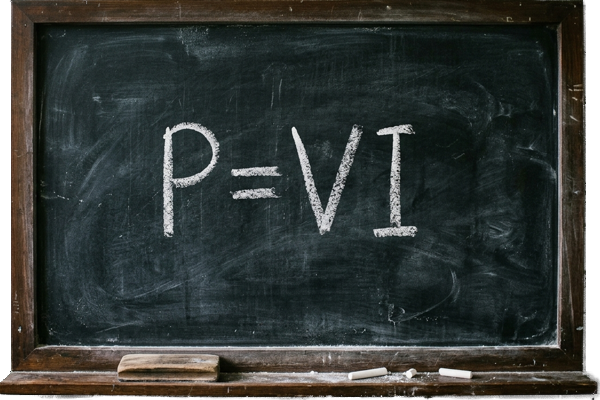 In high school science we learned that P=VI, or Power = Volts x Current. Or Watts = Volts x Amps.
Solar panels
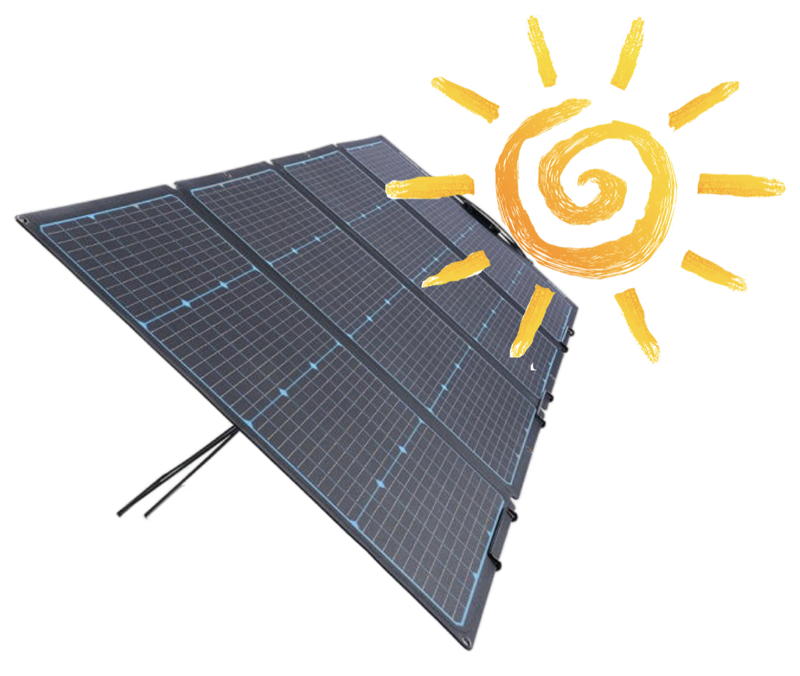 Solar Generator Kits include a solar panel to recharge the battery in the Power Station.
Portable kits will be supplied with either a folding solar panel or a fold up solar blanket. Generally speaking, a folding panel will be more durable over time, while a solar blanket takes up less space in the back of the vehicle.
The output of solar panels is rated in Watts (W). The supplier usually includes a panel with an output suitable for the size of the battery in the power station. (They should also include a storage bag and an extended connecting cable with suitable plug adaptors, if required.)
120W – 150W panels are suitable for smaller power stations (20Ah – 40Ah) while 200W – 300W panels are appropriate for medium sized power stations (80Ah – 160Ah). Keep in mind that solar panel output is dependent on plenty of sunshine – clear skies and no trees – and varies between Summer and Winter.
Also consider the type of travel you will be doing. A folding solar panel is only of any use to recharge your Power Station if you are camped in the same place all (sunny) day. When you are driving you will be able to recharge from the vehicle’s 12V Cig socket adaptor.
How long to recharge? Consider the maths. Your fridge is probably drawing around 3 Amps (A) when the compressor is running, which may only be for 3 x 5 mins each hour. Which will result in it consuming around 1Ah of stored battery energy each hour overnight. In Autumn or Spring seasons let’s say that’s 12 hours with no sunshine. At 1Ah per hour, your fridge is consuming 12Ah of stored energy overnight.
Once the sun comes up, your solar panel will start generating electricity. Let’s estimate that your 200W solar panel, in good sunshine in Autumn/Spring, is capable of restoring 8-10Ah of electrical energy per hour to the Power Station battery – but that’s only in the middle of the day. So we will estimate an average over the 12 hour day of 4Ah per hour, less the 1Ah still being consumed by the fridge each hour during the day. So – a net 3Ah per hour of generated electrical energy during the day will take 4 hours of good sunshine to recharge the battery with the stored energy that was depleted the previous night.
In good weather, with sensible use, this makes your Power Station’s power supply almost indefinite. Without sunshine you are more dependent on the stored energy in the battery. Without any sunshine at all, your 160Ah Power Station (130Ah considering the 80% usable capacity rule) will keep your fridge running for (say) 120 hours, or 5 days.
How long will my battery last?
 Of course, this is another one of those ‘how long is a piece of string’ questions – it all depends on the capacity of your battery, what appliances are connected, how much power they are using, and if your Power Station battery is being recharged from the solar panel. Keep in mind too the 80% rule – for battery longevity, try not to regularly discharge your power station battery below 20% capacity – that’s a usable capacity of 128Ah for a 160Ah battery or 65Ah for an 80Ah battery,
Some examples…
A 12V portable fridge draws 3 amps when the compressor is running, which is only for around 3 x 5 minutes each hour. So on average the fridge is depleting the battery’s stored electrical energy by around 1Ah every hour.

So, with just the fridge connected (24 hours a day) the stored energy in the battery will be depleted at the rate of around 24Ah each 24 hour day. A Power Station with a 160Ah battery (usable capacity 128Ah) will keep the fridge cold for around 5 days (128 / 24) – without any recharging.
A CPAP machine connected to the 240V outlet is drawing maybe 3 – 4 amps. If it is running for around 8 hours sleep time, it is depleting around 24Ah each night. This is as much stored battery energy as the fridge uses over 24 hours.
With a fridge and a CPAP machine running, consuming a total of 48Ah over a 24 hour period, the battery longevity will be reduced to 2.5 days (128 / 48) – without any recharging.
Smaller Power Station? – Halve these times if your Power Station battery has only 80Ah (usable 65Ah) capacity.
Solar Panel – In ideal conditions, with sunny skies and solar recharging available, these times will be increased considerably – possibly indefinitely with enough solar input.
Shopping around…
Check the sites below for each suppliers’ offerings of portable Solar Generator kits of various sizes. Some of these suppliers have regular seasonal specials – Easter, Spring, EOFY, etc – so become familiar with ‘regular’ prices and keep an eye out for any genuine discounts.
|
|
|
|
| Bluetti | EcoFlow | iTechWorld | KickAss |
See also…