Sustainability: Batteries & Solar | Water | Heating
Heating: Air Heating | Diesel or LPG Air Heating? | Hot Water & Cooking
 The hot water system in our van is powered by LPG or 230V electricity. The cooking facilities in our van are also powered by LPG and/or 230V mains power.
-
- Our LPG is stored in two bottles – 1 x 4.5kg and 1 x 2.5 kg.
- Our 230V electricity is available from a mains power connection, or via a 2000W inverter connected to 2 x 120Ah Lithium batteries.
High capacity Lithium batteries with appropriate solar recharging installations are becoming a viable ‘renewable’ alternative to LPG, but in the big scheme of things LPG sustainability is not too much of an issue for us – when free-camping our LPG supply (used only for water heating and cooking) will last a month or two of regular use before requiring a refill. We also carry an induction cooktop for use for cooking if our LPG supply is running low. (I also like the idea of multiple power sources, just in case.)
Getting into hot water
There are three hot water options generally suited for use in Campervans and Motorhomes. The type of system you choose will likely be determined by the type of camping that you do, and your water supply….
-
- LPG/230V Storage systems have a water storage tank (~14L) which is heated when required. This is a popular ‘all-round’ option in Campervans and Motorhomes, and is ideal for general mixed style camping, where you are sometimes in campgrounds with town water and mains power available, and other times free-camping.
- LPG Instant systems have no water storage facility, and heat water as it comes through the unit. These systems are best suited to a camping setup where you might be having longer showers (or in the case of a family in a caravan, more showers) and have access to a constant supply of town water.
- Electric Compact systems have a small storage tank (~10L) and run from 12V or 230V. These systems are suited to small vans and off-grid camping where you have a robust battery / recharging system.
Our Hot Water Heating
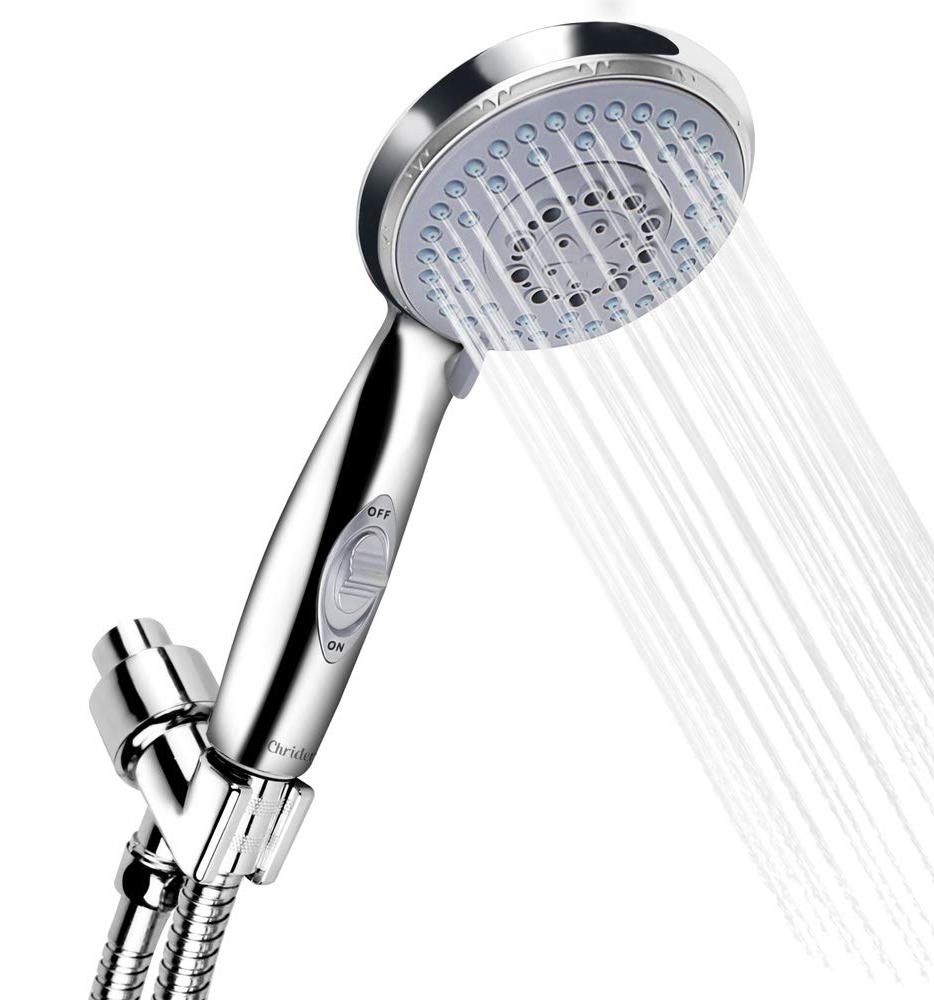 Our Truma UltraRapid hot water system is a ‘storage’ system, powered by LPG or 230V mains power.
Hot water from the system is available in the shower and at the kitchen sink.
The hot water system is protected by a 30psi pressure regulator on the water inlet, dispensing hot water at the rate of 4 litres per minute. When mixed with cold water this provides continuous warm showering time of around 7 minutes (when connected to town water).
Initial heating of the 14 litre hot water tank from cold takes about 10 – 15 minutes to be usable. (The manufacturer instructions suggest 20-30 minutes for the water to be heated to full temperature of 60º to 70ºC). Subsequent reheating is considerably faster. The tank reheats as the water is used, so by the time one person has finished showering and drying it is likely that the tank will be fully reheated for the next person to use. (Anecdotal evidence from others suggests that LPG heats the water to a higher temperature than the 230V option, though the 230V heating has always been hot enough for us.)
Once heated, the water in the well-insulated tank stays hot for several hours without connection to LPG or 230V – which is handy when travelling, for a quick wash of lunch dishes, etc during the day without the need to re-heat the tank.
When we are connected to 230V on a powered site the water heater is running 24/7. If we are free camping we start it up (from LPG) 20 mins before we need to use it.
Instant hot water
Sounds like a great idea, but depends on a good supply of fresh water to keep the flow up to the heater. Not ideal for constant stopping and starting the water flow, as you are likely to be doing with a limited tank supply. This makes these heaters more suited to connection to a town water supply, rather than a relatively small on-board tank. When connected to town water you may also have to back off the water flow a little to maintain the heating capacity of the unit. These heaters run on LPG, and the temperature is set at 50ºC, rather than 60º or 70ºC as with other heaters. (See: Truma AquaGo). They are also generally more expensive than traditional storage water heater alternatives. Instant water heaters likely use less LPG than storage heating systems, only heating the water that you use. Some cheaper units may also struggle in very cold climates. Early days, so read the forum reviews, etc. Combo Heating Units
There are also electric-only water heating options (12V / 230V) that may be suitable in your particular situation – most importantly a reliable Lithium battery power supply would probably be required for regular use. Manufacturer info below….
Other water-only heaters… |
 A more recent option available in the RV market is the ‘instantaneous’ hot water heater, heating water on demand, and requiring no pre-heating time. (Similar to popular residential HW heaters.)
 Some manufacturers offer combo heating units – combining air heating and water heating into one unit. Of course there are pros and cons – obviously good to have only one heater for both jobs, but usually there are compromises with water tank size or fuel options, including 230V heating.
LPG Consumption
The Truma UltraRapid system in our van uses LPG at the rate of 96 gm/h, when it is heating. If free camping we would only heat water when required – maybe 30 mins each day. Which would give us about 80 days of water heating from our 4.5kg LPG bottle.
-
- See also: LPG water heating at high altitudes.
Our Cooking Facilities
 As with hot water appliances, all-electric options are becoming more widely available in the cooking department, most notably the use of induction cooktops as an alternative to LPG cooktops. Of course this requires a robust rechargeable electrical system for extended off-grid excursions.
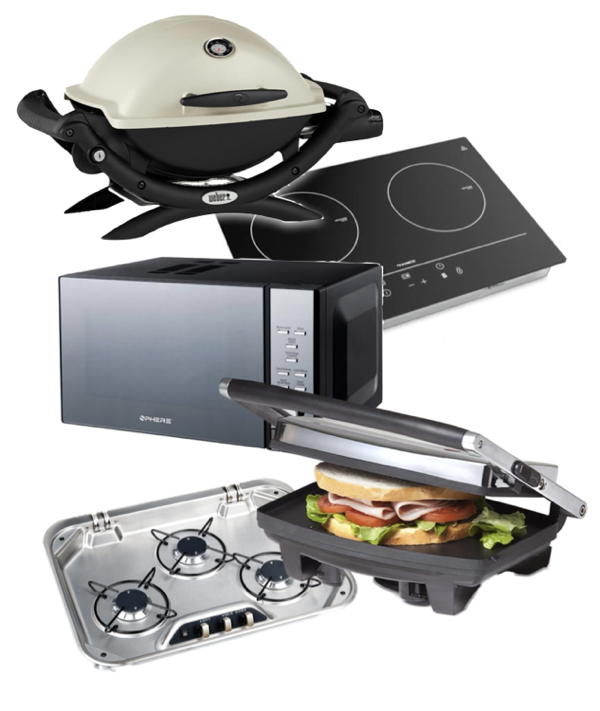
We have 5 cooking appliances, using a combination of fuel supplies….
-
- Kitchen cooktop (LPG 3-burner)
- Induction cooktop (Electric – 1 plate)
- Microwave oven (Electric)
- Sandwich press (Electric)
- Weber BabyQ oven (LPG – external)
Our 3-burner kitchen cooktop and (external) Weber oven are both powered by LPG.
Our microwave oven, induction cooktop and sandwich press require 230V power, but can be powered from our batteries via an inverter. We also carry a 230V toaster, which can also be powered by 12V using the inverter.
As mentioned above, at the rate we use gas for our LPG appliances we have a couple of months supply before a refill is required.
Our induction cooktop isn’t used regularly, but is a handy backup if our LPG supply is low, or if cooking food outside. Induction cooktops are becoming popular with the increased affordability of larger Lithium batteries and inverters, and are now widely available from the usual camping gear suppliers.
Measuring LPG tank level
Often you only know you are low on LPG when your tank runs out – usually half-way through cooking a meal!
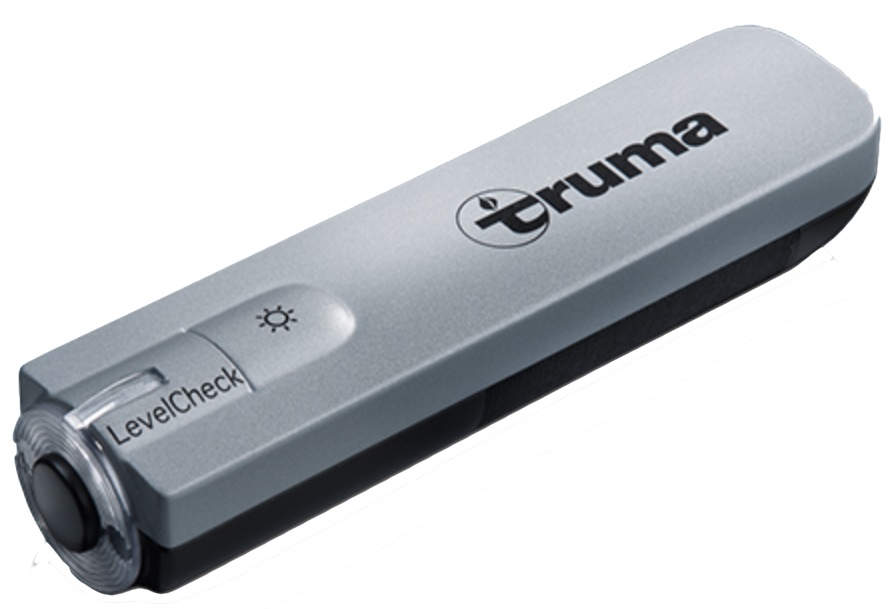 While our main LPG bottle can be swapped out with the spare bottle to resume the supply, it is handy to know how much gas remains in each bottle before leaving on a trip.
We have purchased a Truma Levelcheck ultrasound gauge, which gives an instant indication of the level of liquid remaining in an LPG bottle.
Very handy.
Sustainability: Batteries & Solar | Water | Heating
Heating: Air Heating | Diesel or LPG Air Heating? | Hot Water & Cooking